You built your website and notice that a customer discovers your brand, makes their first purchase, then never returns. Sound familiar? This scenario plays out millions of times daily across businesses worldwide. The solution lies in understanding that each customer travels through distinct stages with your brand, and lifecycle email marketing serves as your roadmap to guide them through every step of that journey.
What is Lifecycle Email Marketing?
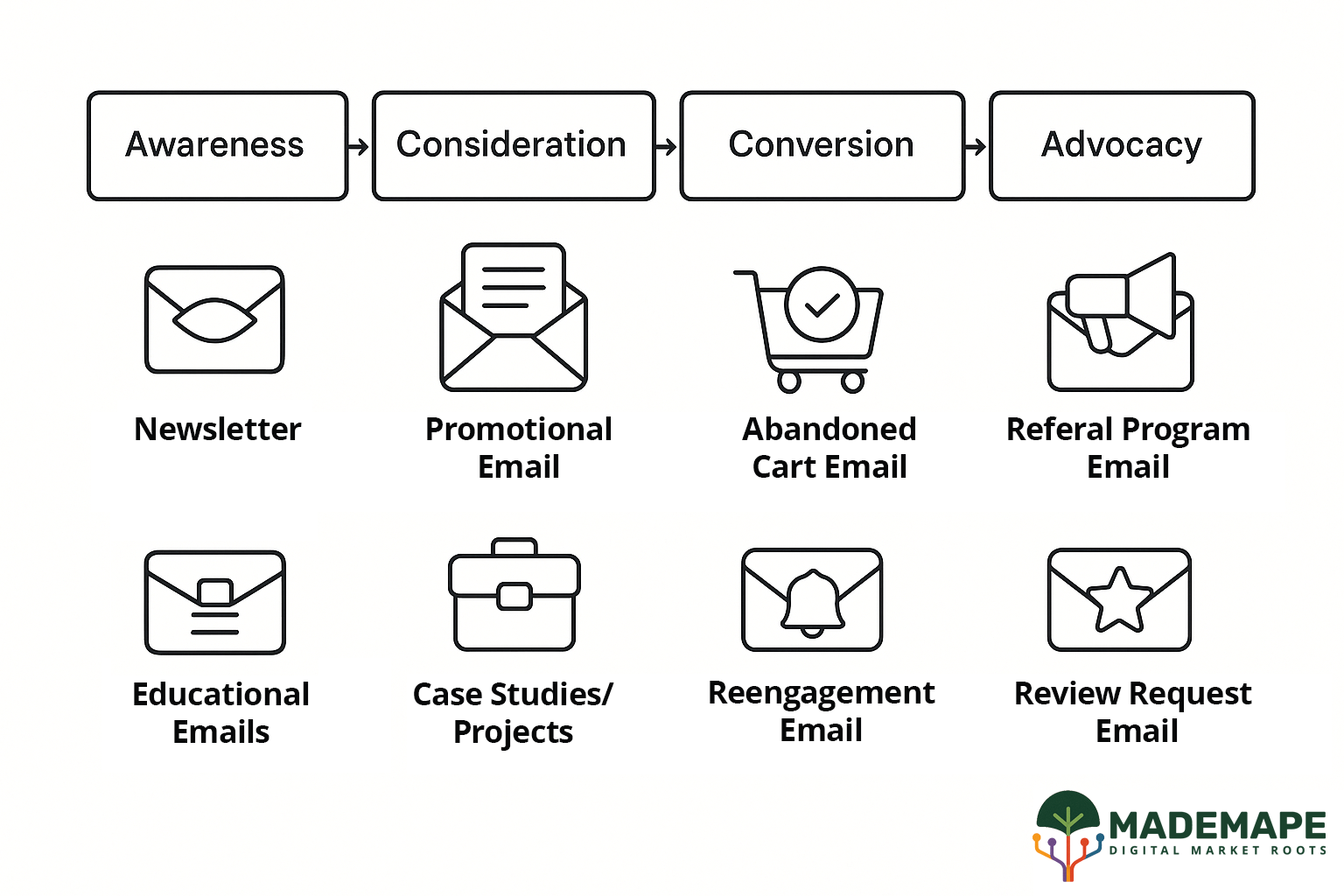
Lifecycle email marketing is the strategic digital marketing practice of sending targeted messages based on where customers stand in their relationship with your brand. Think of it as having different conversations with different people depending on how well you know them. You wouldn’t speak to a stranger the same way you’d talk to your best friend, and the same principle applies to your customers.
This approach recognizes that someone who just discovered your website needs different information than someone who’s been buying from you for years. By mapping out these stages and crafting specific messages for each phase, businesses create meaningful connections that turn casual browsers into loyal advocates. The beauty lies in automation that feels personal, reaching people with exactly what they need when they need it most.
Why People Choose Lifecycle Email Marketing
Smart business owners understand that acquiring new customers costs significantly more than keeping existing ones happy. Lifecycle email marketing addresses this reality by nurturing relationships at every stage, ensuring no customer feels forgotten or overwhelmed. The approach transforms random email blasts into strategic conversations that build trust over time.
The most compelling advantage emerges in the numbers. Businesses using lifecycle email marketing typically see engagement rates triple compared to generic campaigns. This happens because recipients receive content that speaks directly to their current situation and interests. When someone abandons their shopping cart, they get a gentle reminder. When they complete their first purchase, they receive a warm welcome sequence that sets expectations and builds excitement.
Perhaps most importantly, lifecycle email marketing creates predictable revenue streams. By systematically moving people through your customer journey, you can forecast behavior patterns and optimize each touchpoint. This systematic approach turns email marketing from a guessing game into a reliable business engine that works around the clock.
The Different Approaches to Lifecycle Email Marketing
The welcome series approach focuses on making stellar first impressions. When someone joins your email list, they enter a carefully crafted sequence that introduces your brand personality, sets expectations, and delivers immediate value. This foundation sequence typically spans several days or weeks, gradually building familiarity and trust while positioning your brand as the obvious choice for their needs.
Behavioral trigger campaigns respond to specific actions customers take on your website or with your emails. These might include abandoned cart reminders, post-purchase follow-ups, or re-engagement campaigns for inactive subscribers. The power lies in perfect timing. Reaching people when they’re most likely to take action because they’ve already shown interest through their behavior.
The customer milestone approach celebrates important moments in the customer relationship. This includes purchase anniversaries, birthday offers, loyalty program achievements, or upgrade opportunities. These campaigns feel personal and special because they acknowledge the individual’s unique journey with your brand, creating emotional connections that transcend typical marketing messages.
Getting Started with Lifecycle Email Marketing
Beginning your lifecycle email marketing journey requires mapping your customer’s path from first contact to loyal advocate. Most businesses discover they have more touchpoints than initially realized, creating opportunities to guide customers naturally through each stage. The key lies in understanding what information and encouragement people need at each step.
Your email platform becomes the foundation for automation, but the real magic happens in the strategy behind the sequences. Start by identifying the three most critical moments in your customer journey: when they first discover you, when they make their first purchase, and when they might be ready to buy again. These form the core of your lifecycle program.
Implementation begins with creating content that addresses each stage’s specific needs and concerns. Welcome emails should focus on value and expectation-setting, while post-purchase messages should reinforce the smart decision they made while preparing them for ongoing engagement. Each message should feel like a natural continuation of the previous interaction.
Making It Work for Your Situation
Successful lifecycle email marketing adapts to your industry and customer behavior patterns. A software company might focus heavily on onboarding and feature adoption, while a retail brand emphasizes seasonal promotions and repeat purchases. The framework remains consistent, but the content and timing adjust to match your unique business model.
The optimization process involves continuously testing and refining your sequences based on actual customer behavior. What works for one business might not work for another, making it essential to monitor engagement rates, conversion patterns, and customer feedback to improve your approach over time.
Key Takeaways
Lifecycle email marketing transforms scattered email efforts into a cohesive system that guides customers through meaningful relationships with your brand. By understanding where each person stands in their journey and providing appropriate content for each stage, businesses create predictable revenue streams while building genuine customer loyalty.
The investment in setting up these systems pays dividends through increased engagement, higher conversion rates, and more satisfied customers who feel understood and valued. For businesses ready to move beyond random email blasts toward strategic customer relationship building, lifecycle email marketing provides the framework for sustainable growth.