

What is the Google Business Profile?
Google Business Profile (formerly Google My Business) is Google’s free platform that controls how your clinic appears when people search online. It displays your name, address, phone number, hours, photos, reviews, and description when people search for “physical therapy near me.” For PT clinics, this is a primary way patients discover local healthcare providers. You can manage your online presence, respond to reviews, post updates, and provide essential information to help patients learn about your services.
How Does the Google Business Profile Help Patients?
Your description serves an important role in patient education: providing information to prospects who have found your practice through search results or Maps. While star ratings and reviews help with initial discovery, your description appears when patients click into your full profile to learn more about your therapeutic services and approach to care.
Patient Reviews Help Your Clinic Appear in Search Results
Effective rehabilitation marketing recognizes that patient acquisition happens in stages. Your clinic visibility in local healthcare search depends on reviews, ratings, and basic business information. Once patients click into your profile, your description becomes the primary source of information about your services and what makes your practice unique.
Your Profile Appears in Multiple Places
Your healthcare digital presence appears differently across Google’s platforms. In search results, patients see your name, ratings, and brief review snippets. In the Maps view, your description appears in the side panel. In the full business profile, your description shows in the “About” section alongside photos, reviews, and business details.

How Patients Research Physical Therapy
Modern physical therapy marketing must acknowledge that patients often research their conditions online before seeking care. They may arrive at your profile with questions about treatment options and looking for information about providers who treat their specific conditions.
Informed Patients Seek Professional Guidance
Many patients conduct extensive online research about their symptoms before consulting healthcare providers. These informed patients often want confirmation that you have experience treating their specific condition and can provide appropriate therapeutic services. Your Google business optimization should balance providing helpful information with professional credibility.
Patients Compare Multiple Provider Options
Patients conducting local healthcare searches typically review several physical therapy profiles before making decisions. Your description should clearly communicate your services, specializations, and practice approach while providing the practical information patients need to make informed decisions about their care.
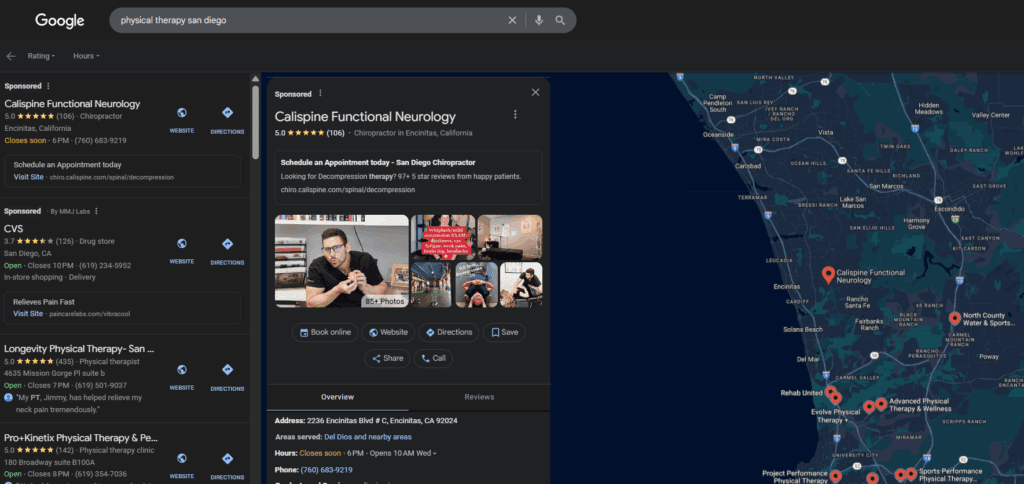
Include Essential Information in the Google Business Profile
Understanding how patients evaluate physical therapy practices reveals what information your Google Business Profile description should include. Patients seek providers who treat their conditions, accept their insurance, and offer convenient access to care. Your Google Business Profile serves as the primary information source for patients making healthcare decisions, so comprehensive details are crucial for patient acquisition.
Clear Service Information Helps Patient Decisions
Patients often research specific treatment approaches they’ve read about online before visiting your Google Business Profile. Your description should clearly state the conditions you treat and therapeutic services you provide, using language patients can understand while maintaining professional accuracy. Many prospective patients arrive at your profile with questions about specific treatments like manual therapy, dry needling, or sports rehabilitation they’ve discovered during their research.
Include specific conditions you commonly treat such as back pain, neck pain, sports injuries, post-surgical rehabilitation, and chronic pain conditions. List your primary therapeutic services including manual therapy, therapeutic exercise, patient education, and any specialized techniques your practice offers. This specificity helps patients immediately identify whether your services align with their healthcare needs.
Mention any special populations you serve, such as athletes, seniors, pediatric patients, or workers’ compensation cases. This targeted information helps patients understand if your practice has relevant experience with their demographic and specific circumstances.
Practical Details Matter to Patients
Insurance acceptance, scheduling options, and location convenience significantly influence patient decisions when reviewing your Google Business Profile. Include essential practical information that helps patients determine if your services meet their needs and circumstances. These operational details often determine whether interested patients convert to actual appointments.
Clearly state your insurance participation, including major carriers like Blue Cross Blue Shield, Aetna, Cigna, and whether you accept Medicare or Medicaid. Mention if you offer cash payment options or payment plans for patients without insurance coverage. This transparency prevents patients from investing time in research only to discover coverage issues later.
Highlight scheduling conveniences such as same-day appointments, extended hours, weekend availability, or online booking options. Mention accessibility features like wheelchair access, parking availability, or public transportation proximity. Include any telehealth or home visit services you provide, as these options have become increasingly important to patients seeking flexible care delivery.
Address referral requirements clearly, stating whether patients need physician referrals or if you accept direct access patients. This information saves patients time and eliminates confusion about how to initiate care at your practice.
Structure Your Description Effectively
Effective physical therapy marketing descriptions provide clear, helpful information organized in a logical flow: conditions treated, services provided, and contact information for next steps.
Lead with Conditions You Treat
Begin by clearly stating the types of conditions and patient populations you serve: “We provide physical therapy services for patients with back pain, sports injuries, and post-surgical rehabilitation needs.” This immediately helps patients understand if your services match their situation.
Describe Your Service Approach
Explain your treatment philosophy and services in terms patients can understand: “Our licensed physical therapists use evidence-based techniques including manual therapy, therapeutic exercise, and patient education to help patients work toward their recovery goals.”
Provide Clear Contact Information
End with straightforward next steps: “Call our office to schedule a consultation and discuss your specific needs” or “Contact us to verify insurance coverage and appointment availability.”
Sample Google Business Profiles for PT Practices
These descriptions help new clients find your practice easily because they’re loaded with keywords that list the type of problems that clients might have and look for when searching for a clinic.
Sports Medicine Focus
“We provide physical therapy services for athletes and active individuals recovering from sports injuries. Our licensed therapists have experience treating conditions such as sprains, strains, and post-surgical rehabilitation. We offer evidence-based treatments including manual therapy and therapeutic exercise. Contact us to discuss your specific needs and insurance coverage.”
General Orthopedic Practice
“Our practice provides physical therapy services for patients with orthopedic conditions including back pain, neck pain, and joint injuries. We offer comprehensive evaluations and evidence-based treatment approaches. Our licensed therapists work with patients to develop individualized care plans. Call to schedule a consultation and verify insurance acceptance.”
Post-Surgical Specialization
“We specialize in post-surgical rehabilitation for patients recovering from orthopedic procedures. Our licensed physical therapists work in coordination with referring physicians to provide appropriate care following surgery. We accept most major insurance plans. Contact our office to discuss your rehabilitation needs.”
Geriatric Care Focus
“Our practice provides physical therapy services designed for older adults, including balance training, fall prevention, and mobility improvement programs. We accept Medicare and most insurance plans. Our licensed therapists have experience working with senior patients. Call to schedule an evaluation.”
Pain Management Approach
“We provide physical therapy services for patients experiencing chronic pain conditions. Our evidence-based approach includes manual therapy, therapeutic exercise, and pain education. Our licensed therapists work with patients to develop appropriate management strategies. Contact us to discuss your specific condition and insurance coverage.”
How to Actually Monitor Your Google Business Description
- Set up Google Business Profile insights and check Q&A monthly for unaddressed patient questions
- Review competitor profiles quarterly to benchmark service positioning
- Update via “Edit profile” → “Business description,” prioritizing most-searched services within 750 characters
- Track changes in a spreadsheet with dates, modifications, and resulting metric changes
- Monitor profile performance 2-4 weeks after updates and set 90-day review reminders
- Address red flags immediately when patients repeatedly ask about unlisted services
Conclusion
Your Google Business Profile description bridges the gap between patient discovery and appointment scheduling. While reviews help patients find you, your description provides the essential information they need to choose your services.
Focus on clear communication about the conditions you treat, services you provide, and practical details like insurance acceptance. Avoid outcome promises and use professional, accessible language that builds trust with prospective patients.
Effective physical therapy marketing through your healthcare digital presence succeeds when it helps the right patients find appropriate care. Regular updates and accurate information support both patient acquisition and professional credibility in your local healthcare market.