

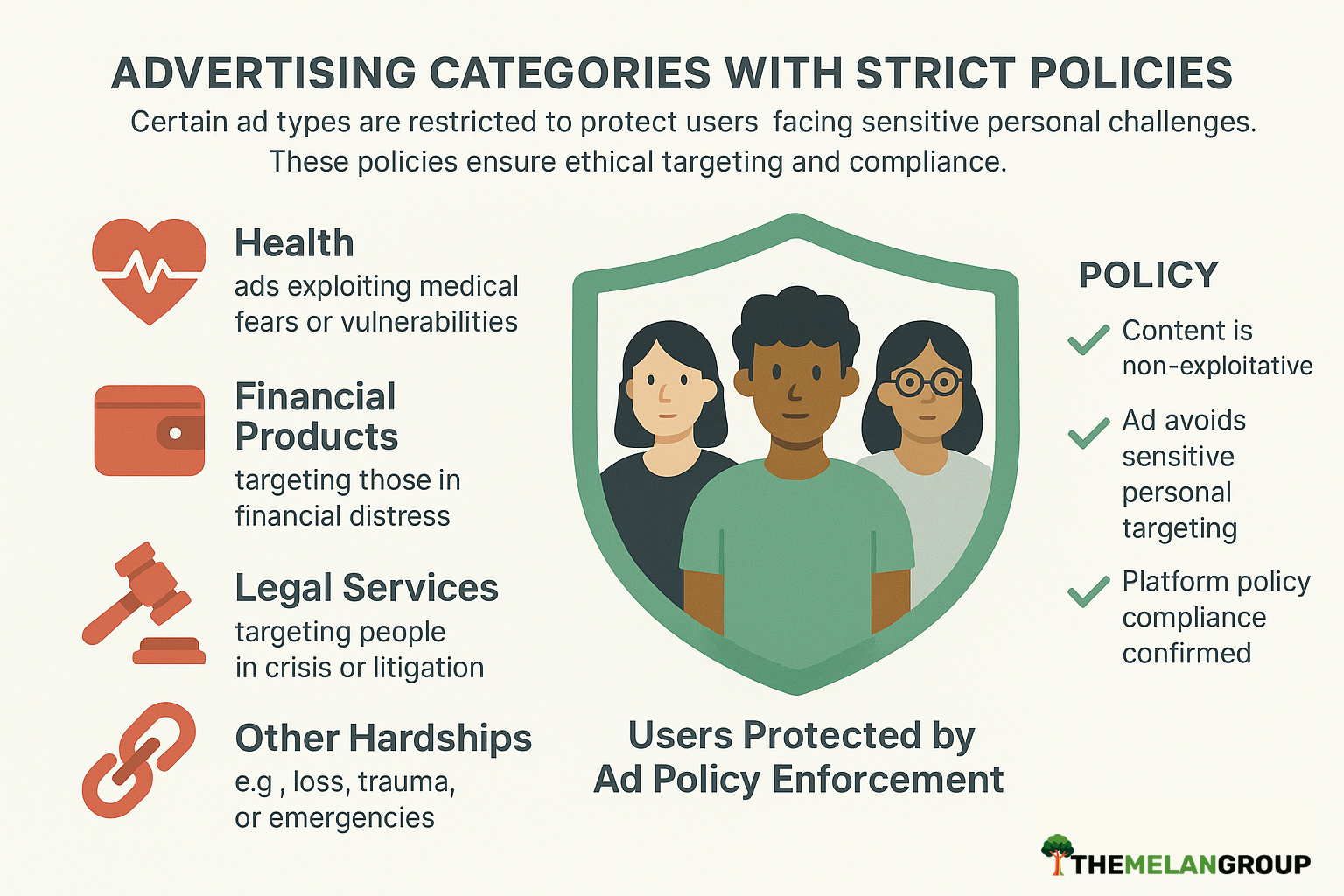
Google Merchant Center blocks ads that target people dealing with health problems, money troubles, relationship issues, criminal problems, abuse, or negative life situations. Google Merchant Center is where online stores upload their products to show up in Google Shopping. This policy stops businesses from targeting people when they are going through hard times.
Google says “users don’t want to see ads that exploit their personal struggles, difficulties, and hardships” including health conditions, medical treatments, money problems, or bad personal experiences. The company created this rule to protect people from ads that might take advantage of them during difficult moments in their lives.
Google uses two different rule systems. The first system stops all personalized ads from targeting people based on sensitive topics. The second system is stricter and stops businesses from promoting sensitive products to custom audience lists, which means when businesses upload their own customer email lists to create ads.
Health Products Get Blocked Most Often
Health products face the toughest rules. Google blocks ads for chronic diseases like diabetes and arthritis, mental health treatments, medical devices, private body health issues, and medical surgeries. Even helpful content like “information about how to support your autistic child” can trigger this block.
Businesses cannot claim their products will cure or treat medical conditions because “any descriptions suggesting that a product will improve or enhance a person’s condition could be interpreted by Google as a health claim” and lead to account suspension. This means companies selling vitamins, exercise equipment, or wellness products must be very careful about what they promise.
Health businesses can still advertise by targeting doctors and medical professionals instead of regular consumers. This business-to-business approach helps avoid the personal hardship rules by focusing on healthcare workers rather than sick people looking for treatments.
Money Problems and Legal Services Blocked
Google blocks ads targeting people with money problems including “bankruptcy services, welfare services, homeless shelters, unemployment help, and predatory lending.” Predatory lending means unfair loans with very high fees that target people who desperately need money.
The rules also cover relationship problems and legal troubles including “divorce services, books about dealing with divorce, funeral products, family counseling” and legal services like “bail bonds and criminal defense lawyers.” Google wants to stop businesses from targeting people during the worst moments of their lives.
How Google Enforces These Rules
Google has stricter rules for businesses that upload their own customer lists compared to businesses that use Google’s standard targeting options. If you upload email addresses to create custom ads, you face tougher restrictions than if you just target by age, location, or general interests.
Businesses must get “clear permission to use customer data” and “use the data ethically.” The safest approach is to use Google’s pre-made audience options instead of uploading your own customer lists when advertising sensitive products.
Google’s computer systems automatically check millions of products every day. These systems use artificial intelligence trained to spot policy violations, often blocking ads within hours of upload without human review.
How to Fix Blocked Ads
When your ads get blocked, you have three options. First, change your ad text and website to remove the problem content, then ask Google to review it again. Second, change your targeting settings to remove sensitive audience targeting and appeal the decision. Third, if you think Google made a mistake, you can appeal directly through your Google Ads account.
For health products, add disclaimers like “*Individual results may vary” next to customer reviews and avoid promising specific medical results. Never use negative language that shames people about their appearance or suggests bad things will happen if they don’t buy your product.
Google usually reviews appeals within one business day. More complicated cases with multiple policy problems may take longer to resolve.
What This Means for Businesses
Google keeps making these rules stronger to protect user privacy. The company now requires businesses to clearly label AI-generated content and provide better product information.
Healthcare and medicine companies face the biggest challenges and must completely change how they advertise. Instead of targeting sick people, they must focus on advertising to doctors and medical professionals. Financial companies similarly cannot target people with money problems and must focus on general financial education instead.
These rules apply to all Google Merchant Center accounts worldwide. The automated systems can immediately stop your ads or suspend your entire account. This affects businesses using remarketing lists, which are ads to people who visited your website, custom audiences created from uploaded customer emails, and demographic targeting in Shopping campaigns and Display Network ads.
Key Takeaways
- Google has stricter rules for businesses that upload their own customer lists compared to using Google’s standard targeting options for sensitive products.
- Health and financial businesses must target professionals instead of consumers to avoid advertising to vulnerable people during difficult times.
- Blocked ads can be fixed by changing content, adjusting targeting, or appealing the decision, with most reviews completed in one business day.
Learn More & Keep Reading
- Google Merchant Center Compliance Guide for E-commerce Businesses – Essential strategies for maintaining product approval and avoiding account suspension with step-by-step compliance checklists.
- Privacy-First Marketing: Alternatives to Personalized Advertising for Small Businesses – Effective marketing approaches that comply with new privacy regulations while maintaining customer engagement and conversion rates.
- How to Create Healthcare Marketing for Google Ads – Comprehensive guide for medical and wellness businesses to advertise legally within Google’s restrictive healthcare advertising framework.
- Google Shopping Product Marketing Strategies That Won’t Trigger Policy Violations – Proven techniques for improving product visibility and sales performance while maintaining full compliance with advertising policies.